
The best time to visit the North Shore
The North Shore is worth a day in any month, but it is two different places depending on the season. In winter it is a stadium for the biggest rideable waves on Earth. In summer the same beaches turn into calm, clear swimming spots. Here is how to choose.
Winter: roughly November to March
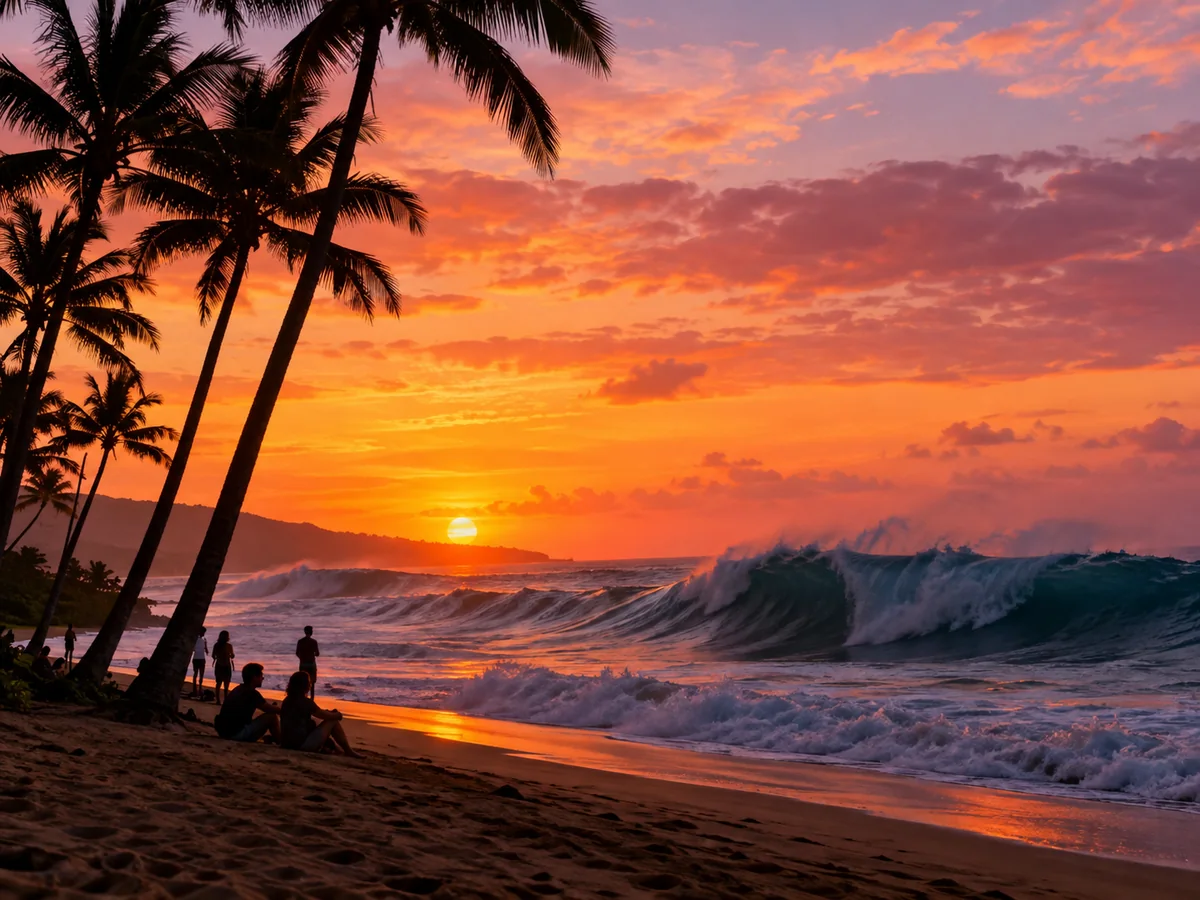
North Pacific storms send huge swells onto the coast. The Banzai Pipeline, Waimea Bay and Sunset Beach fill with the world’s best surfers, and the pro contests, led by the Pipeline event in December, draw crowds to the sand. It is spectacular to watch, and it is not a time to swim: shore break and rip currents on big days can injure strong swimmers, and lifeguards close beaches. Expect more rain, heavier traffic and fuller parking lots on swell days. A tour is especially handy now, because someone else deals with the jammed highway.
Summer: roughly May to September
The ocean usually goes flat and glassy. Waimea Bay becomes a swimming beach where people jump from the big rock, and Shark’s Cove is one of the best snorkel spots on Oahu. This is the season for the Surf Bus beach day, with its snorkel gear and kayaks, or a small-group turtle snorkel tour. It is also the busiest visitor season, so book a few days ahead.
The in-between months
April and May bring easing surf, green valleys after the winter rain and fewer crowds. September and October are warm and quiet, with the first swells arriving from late October. Both are sweet spots if your dates are flexible.
What works all year
The turtles at Laniakea, the Kahuku shrimp trucks, Haleiwa’s shave ice and the Dole Plantation do not care about the season. Waimea Falls is open all year (closed Mondays), though heavy rain can close the swim for a day. Whatever the month, go midweek if you can and leave Waikiki early. Our one-day itinerary has seasonal swaps built in, and the FAQ answers the common safety questions.